
Decarb Symposium Brings Together Industry, Policy, and Research
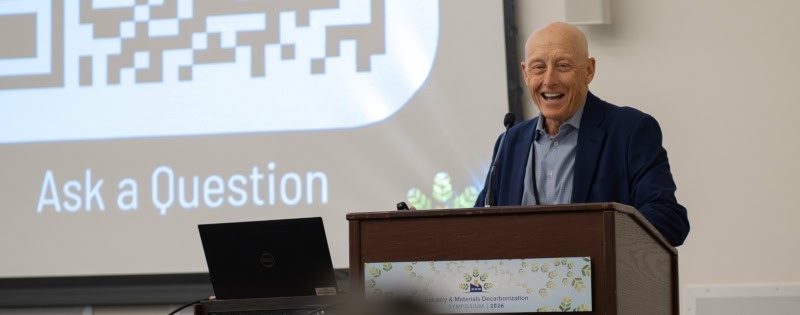
The UC Davis Industry & Materials Decarbonization Symposium, held April 16 at the UC Davis Conference Center, brought together more than 200 leaders from industry, government, utilities, and academia for a full day of discussion on the challenges and opportunities associated with reducing emissions from industrial systems and materials production.
Throughout the day, discussion focused on how decarbonization is being pursued in practice, through industrial energy system improvements, electrified thermal technologies, and approaches to reducing the carbon intensity of materials. This included work on industrial heat pumps and electrified process heat, along with strategies such as reducing clinker content in cement and expanding the use of supplementary cementitious materials. Conversations also pointed to the role of design choices and procurement in shaping material emissions outcomes.
A recurring theme was the gap between technical capability and implementation at scale. Participants highlighted constraints around cost, infrastructure, and material availability, along with the importance of standards and data in enabling broader adoption. The discussion emphasized the need for coordination across supply chains and alignment between policy, market signals, and project delivery to move from demonstration to routine practice.
Presentation materials and recordings from the day are now available.
Jae Yong Suk Named Rosenfeld Chair in Energy Efficiency
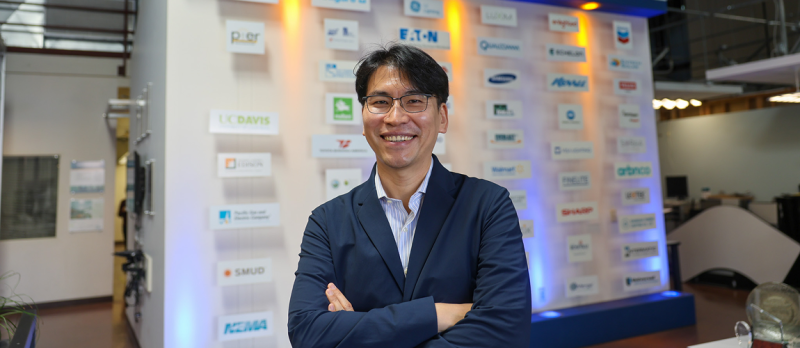
Jae Yong Suk, professor of design and director of the California Lighting Technology Center, has been named the Arthur H. Rosenfeld Chair in Energy Efficiency at UC Davis.
The endowed chair supports research, education, and engagement to advance energy-efficient technologies and their application in practice, including work that informs policy and supports deployment.
The position honors the legacy of Arthur H. Rosenfeld, a physicist and policymaker widely regarded as a foundational figure in the field of energy efficiency, whose work helped establish modern approaches to building technologies, standards, and energy policy.
It also builds on the work of Michael Siminovitch, professor emeritus and founding director of the California Lighting Technology Center, who established the center to support collaboration across industry, utilities, and public agencies and to accelerate the development and commercialization of energy-efficient lighting technologies.
IAW FlexHub Launches at UC Davis
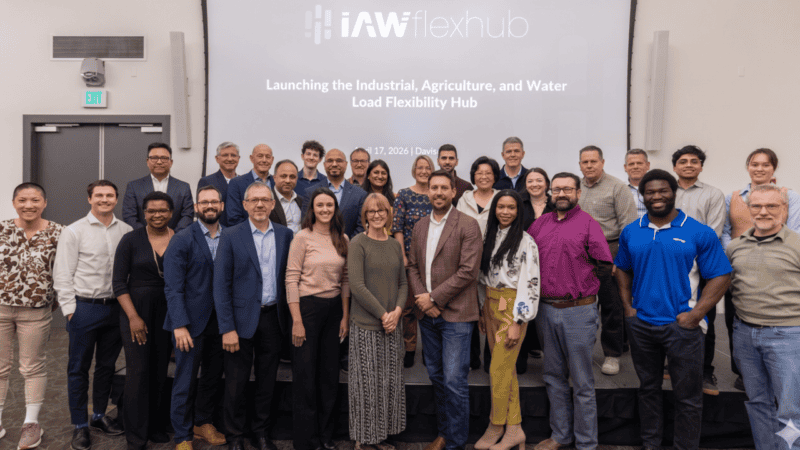
The Industrial, Agriculture, and Water Load Flexibility Hub (IAW FlexHub) was formally launched on April 17 at the UC Davis Conference Center, bringing together stakeholders from across industry, utilities, research, and policy to mark the start of a new statewide effort focused on demand flexibility.
The IAW FlexHub is designed as a platform to advance the research, demonstration, and deployment of flexible load technologies in large energy-using sectors, with a focus on translating technical work into real-world applications.
Discussions at the launch focused on the practical challenges of scaling demand flexibility, including the role of electricity rate structures, customer risk, and operational constraints. Participants emphasized the need for approaches that can respond to changing grid conditions while maintaining reliable operations, along with the importance of demonstrating clear value in practice—both in terms of cost and broader operational benefits.
The event also introduced the Hub’s initial portfolio of demonstration projects and opportunities for continued stakeholder engagement.
The call for demonstration project concepts remains open through June 19.
WCEC Showcases Modular Data Center Cooling at ARPA-E Summit

Researchers from the Western Cooling Efficiency Center traveled to San Diego to participate in the ARPA-E Energy Innovation Summit, where they presented a modular, high-efficiency approach to data center design and cooling.
The system is a containerized data center built in standard shipping modules that integrate computing equipment with a closed-loop liquid cooling system. Instead of relying on conventional air cooling, it uses direct-to-chip liquid cooling and high-efficiency heat exchangers. This approach allows the system to support much higher power densities while reducing energy use and eliminating the need for external water connections. The modular design also enables rapid deployment and flexible scaling, making it suitable for emerging high-performance computing and AI workloads.
The ARPA-E Energy Innovation Summit brings together researchers, industry leaders, and investors to highlight emerging energy technologies and support their transition from research to real-world deployment.
Market Transformation Research Program Publishes Recruitment Guide for Energy Research
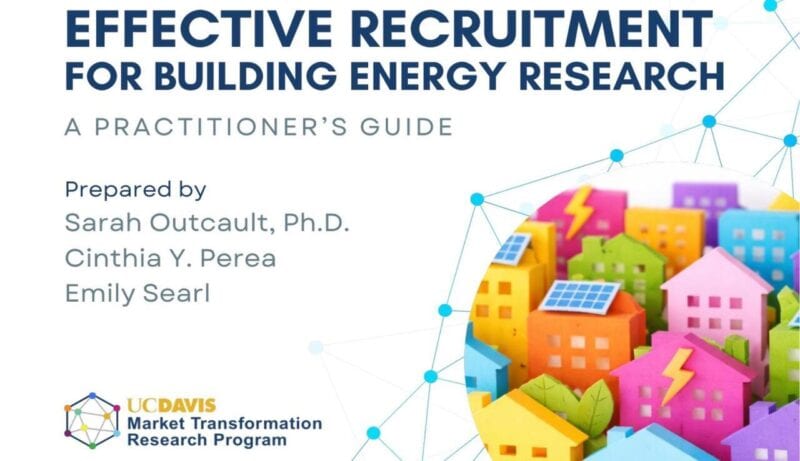
The Market Transformation Research Program has released a new guide outlining best practices for recruiting participants into building energy research projects, with a focus on improving engagement across diverse households and communities.
Effective Recruitment for Building Energy Research: A Practitioner’s Guide draws on academic and applied research to identify common barriers to participation and strategies for addressing them. These include aligning project design with participant priorities, working through trusted community partners, and using clear, accessible communication to build understanding and trust.
The guide also highlights approaches to incentives, outreach, and culturally responsive engagement, particularly when working with communities that may face additional barriers to participation.
Lab2Slab Open House Showcases New Materials and Field Testing
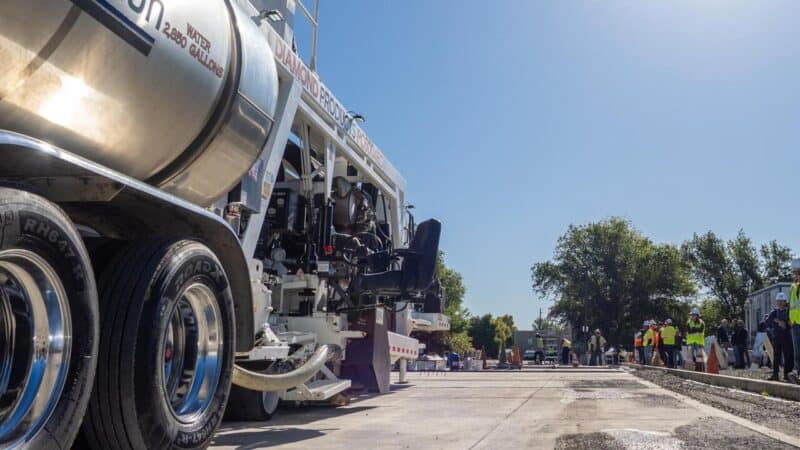
The 2026 Lab2Slab Open House, hosted by the UC Pavement Research Center on April 23, brought together industry partners and researchers to demonstrate new materials and construction practices for concrete pavements.
The event featured construction and evaluation of test pavement sections using emerging approaches, including novel supplementary cementitious materials and surface treatments. Demonstrations highlighted how these approaches function in practice, along with methods for construction, quality control, and early-stage performance.
The open house was held in conjunction with the California Concrete Pavement Conference, which convenes industry professionals, researchers, and public agencies to advance the design and construction of durable, long-life concrete infrastructure.
Catch Up on Recent Seminars Online
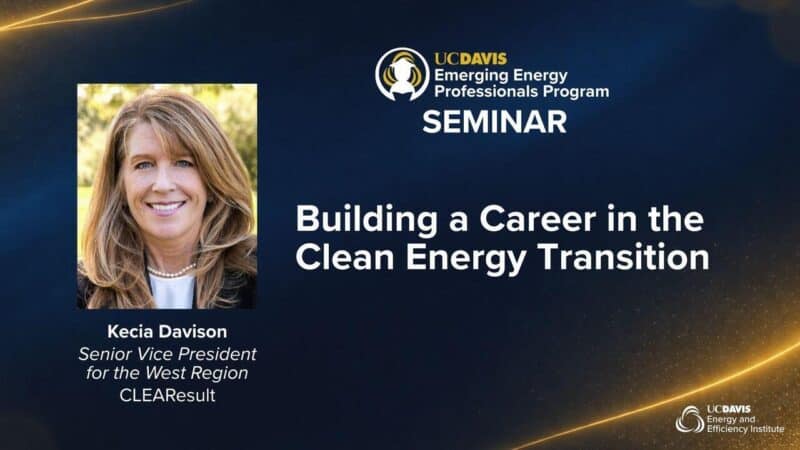
If you couldn’t join us for our recent Emerging Energy Professionals Seminar, Materials Decarbonization, or Demand Flex events, you can now watch them online. Catch up on this and other recent seminars anytime!