
CalNEXT Launches Knowledge Sharing Series with UC Davis Residential Energy Research
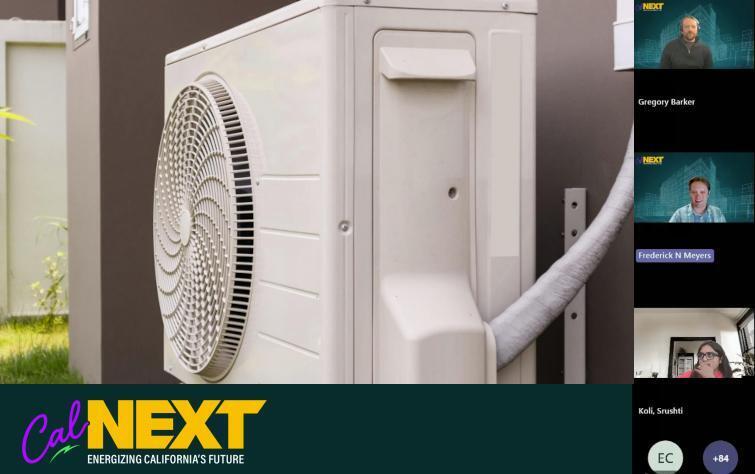
CalNEXT recently launched its Knowledge Sharing Webinar series with a residential energy technologies event featuring three projects led by UC Davis researchers.
CalNEXT is a statewide emerging technology program that identifies, tests, and supports electric technologies and delivery methods that can help advance California’s energy efficiency and decarbonization goals. UC Davis researchers have contributed to several CalNEXT-funded projects focused on efficient building technologies, electrification, and flexible energy use.
Two presentations featured work from the California Lighting Technology Center. Andrew Harper presented research on residential smart panels, which can help manage circuit-level loads and reduce the need for costly electrical panel upgrades. Manuel Lopez presented research on advanced home energy management systems, which can support energy cost savings, improved load management, and better integration of residential energy technologies.
A third presentation featured work from the Western Cooling Efficiency Center. Fred Meyers shared findings from laboratory testing of a variable-speed, air-to-air, multi-function heat pump that can provide space heating, space cooling, water heating, and heat recovery.
The next CalNEXT Knowledge Sharing Webinar will focus on commercial HVAC and will be held Tuesday, June 16. WCEC Director of Engineering Curtis Harrington will present on CalNEXT-funded research evaluating heat pump rooftop units as a pathway to reduce energy use, operating costs, and greenhouse gas emissions in commercial buildings.
WCEC Researchers Test Ventilation Controls to Improve Classroom Indoor Air Quality

Researchers from the Western Cooling Efficiency Center have published a new study evaluating a low-cost ventilation control strategy designed to reduce energy use and improve indoor air quality in school buildings.
The study, published in Science and Technology for the Built Environment, tested the IAQ-Energy Controller in two occupied classrooms in California’s Central Valley. The controller adjusts outdoor air intake based on indoor carbon dioxide levels, outdoor fine particulate matter, and temperature. When outdoor air pollution is elevated, the system reduces outdoor air intake and uses an internet-connected portable air cleaner to help maintain clean airflow indoors.
The field test found that the controller reduced classroom carbon dioxide concentrations by 16% to 18% compared with fixed-rate ventilation. It also maintained or improved clean airflow for infectious aerosol removal, delivered comparable thermal comfort, and did not increase energy use.
The findings point to a practical retrofit approach for schools and other buildings that need to balance ventilation, outdoor air pollution, energy use, and occupant health. This is especially important in regions where wildfire smoke and other air quality events can make outdoor air less safe to bring indoors.
WCEC Researchers Model High-Efficiency Cooling for Modular Data Centers

Researchers from the Western Cooling Efficiency Center have published a new study on a liquid-cooled modular data center design for high-density computing and artificial intelligence applications.
The study, published in the Journal of Electronic Packaging, presents a chiller-less cooling system that uses a single liquid loop to remove heat from server components and reject it to outdoor air. The design uses direct-to-chip liquid cooling, a MUSE cold plate, and a microchannel polymer heat exchanger dry cooler to support compact, high-compute-density data centers.
The modeling results show that, at an outdoor temperature of 40°C, optimized liquid and fan flow rates can reduce cooling power to 2.1% of compute power for a GPU case temperature of 75°C. The study also found that improvements to the thermal interface material and dry cooler had the largest effect on system performance, with the best-case cooling power falling below 1% of compute power.
The findings point to a potential path for reducing cooling energy in modular edge data centers, which are expected to play a growing role in AI, advanced sensing, medical imaging, autonomous systems, and other data-intensive applications.
CLTC Research Explores Lighting, Public Art, and Nighttime Campus Spaces
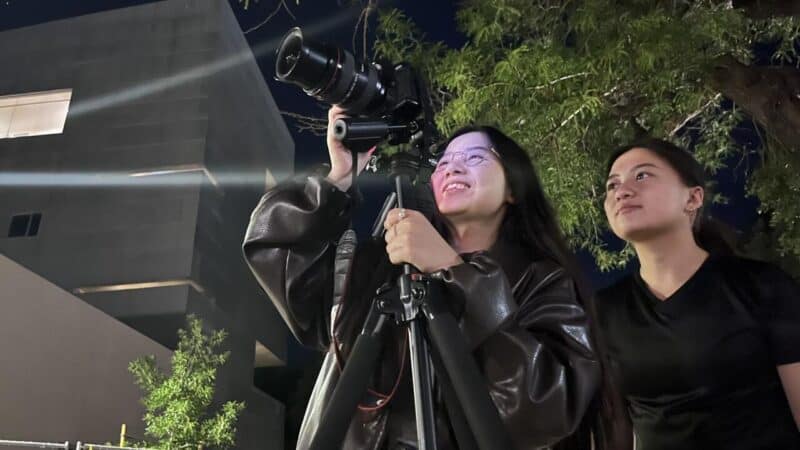
Researchers from the California Lighting Technology Center are working with campus and arts partners to explore how lighting and public art can improve nighttime environments at UC Davis.
Earlier this month, researchers took nighttime campus photographs at several dark locations throughout UC Davis. The fieldwork builds on a recent analysis of campus light poles to identify high-priority areas and better understand site conditions for future lighting art installations.
The project brings together engineering technology and design thinking to support student health, wellbeing, and perceived safety. It also includes collaboration with Taipei National University of the Arts and is supported by a seed grant from UC Davis Global Affairs.
The research points to new ways lighting design can support both functional and artistic goals in shared campus spaces.
IAW FlexHub Seeks Demonstration Project Concepts
The Industrial, Agriculture, and Water Load Flexibility Hub (IAW FlexHub) is seeking demonstration project concepts from partners interested in advancing load flexibility in large energy-using sectors.
The IAW FlexHub is a statewide initiative focused on scalable and interoperable load-flexible technologies for industrial, agricultural, and water facilities. Developed by Momentum in partnership with UC Davis, EPRI, Lawrence Berkeley National Laboratory, and other research partners, the Hub supports demonstration projects, technical collaboration, market development, and stakeholder engagement.
The open call is available to individuals and public or private entities, with the exception of publicly owned utilities. The Hub is especially interested in sites that could host relevant demonstrations or project concepts with secured site hosts.
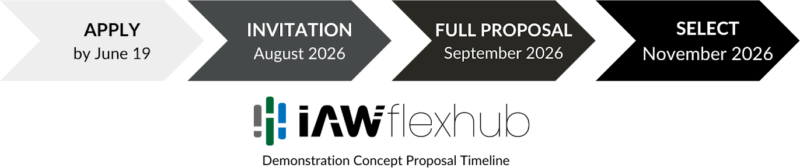
Concepts may be submitted through an online form through June 19. Partial submissions are encouraged, and selected applicants will be invited to submit full proposals later this year.
Catch Up on Recent Events and Seminars Online
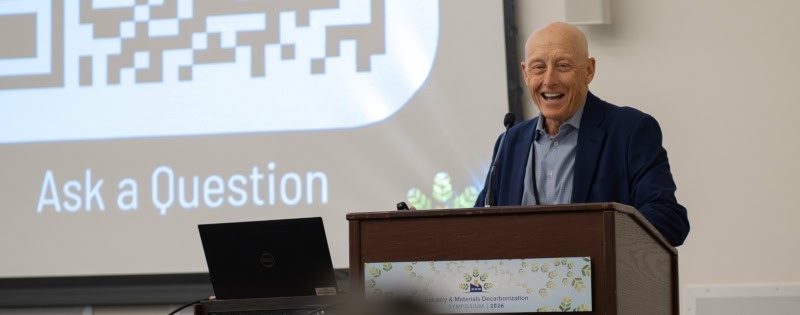
If you couldn’t join us for our Industry & Materials Decarbonization Symposium, Emerging Energy Professionals Seminar, Materials Decarbonization, or Demand Flex events, you can now watch them online. Catch up on this and other recent events and seminars anytime!